

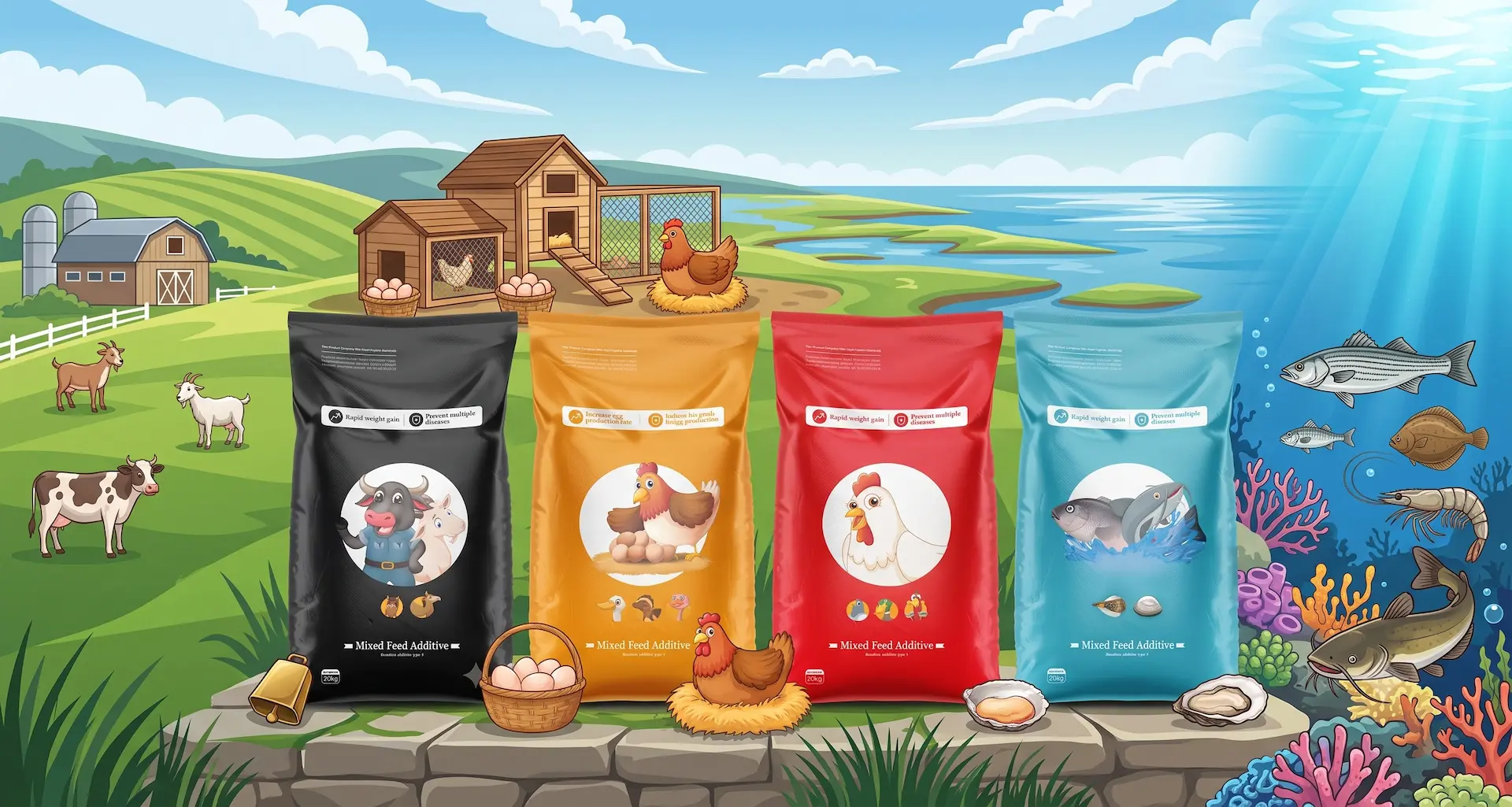
Mixed Feed Additives
The invention relates to a novel feed additive which can increase the weight of animals, regulate the intestinal health of the animals, prevent diarrhea and improve the immunity of the animals.
Special for egg-laying poultry
- Improve the anti-stress ability of chickens and increase the survival rate of chicks.
- Improve the egg production rate of laying hens and increase egg weight by 1–2 g per egg.
- Improve eggshell quality and reduce cracked, thin-shelled, and misshapen eggs.
- Extend the peak egg production period of laying hens.
- Help prevent and treat chicken diarrhea.
- Reduce the morbidity and mortality of chickens.
Used for poultry such as broiler
- Reduce chick mortality and improve overall survival rates.
- Promote rapid weight gain, with an average increase of approximately 0.2 kg per chicken at market weight.
- Strengthen flock immunity and help reduce the occurrence of respiratory and gastrointestinal diseases.
- Promote healthy chickens with glossy feathers and smooth, shiny toe scales.
Used of ruminants
- Promote rapid growth of cattle and sheep, helping to shorten the breeding cycle.
- Help prevent and treat diarrhea in cattle and sheep, reducing its incidence by up to 80%.
- Support the treatment and prevention of rickets, with noticeable benefits for animals that have normal feed intake but poor weight gain.
- Help prevent and manage pica, including the consumption of dirt, plastic, and other non-food materials.
- Promote estrus in cows and ewes and help reduce reproductive disorders by up to 80%.
- Improve the survival rate of calves and lambs while helping reduce postpartum milk deficiency.
- Support milk quality and help reduce the incidence of disease in calves and lambs by more than 90%.
For aquatic animals
- Promote rapid weight gain in aquatic animals.
- Improve the anti-stress ability of aquatic animals and help reduce mortality.
- Help improve water quality, support liver and gallbladder health, and increase animal survival rates.
- Support intestinal health and promote better digestion.
- Improve feed utilization efficiency and help reduce feed waste.